Mandala 3D Layered SVG Cut File-37 for Crafts Graphics
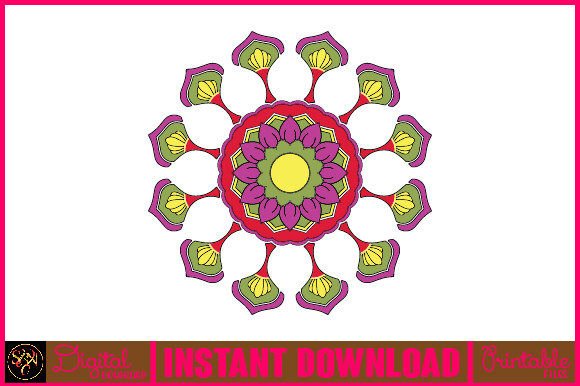
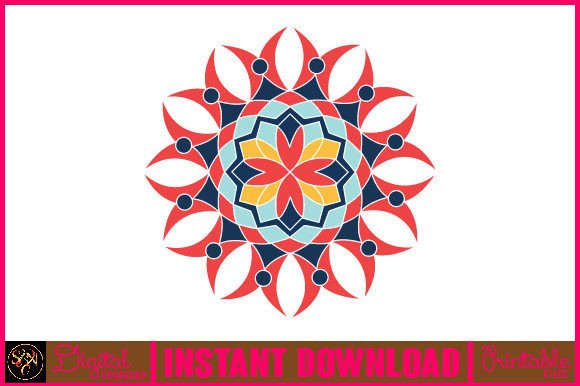
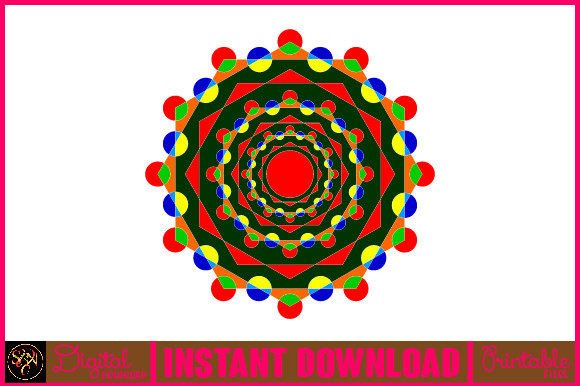
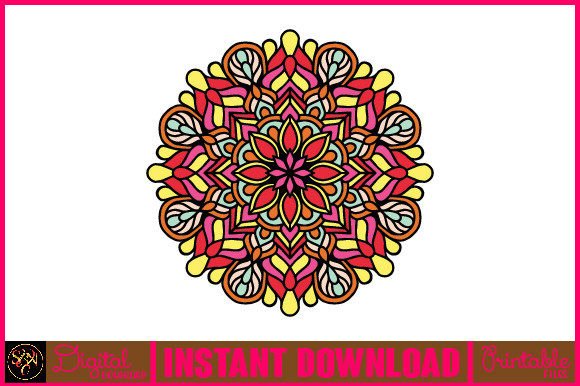
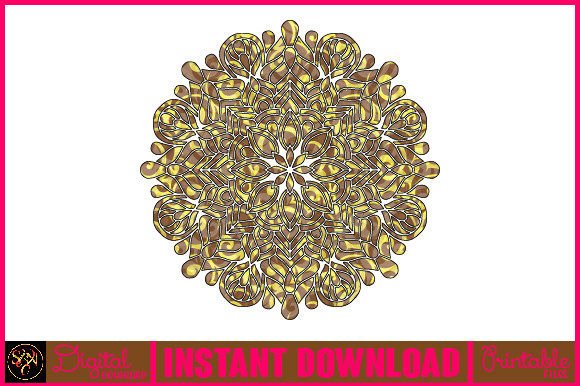
When I first opened the folder for Mandala 3D Layered SVG Cut File-37, I immediately saw something that sits comfortably between spiritual decor and a premium tribal aesthetic. This is not a lightweight pastel doodle. It is a hand-drawn colorful mandala built around strong ornamental motifs, dense concentric geometry, and a layered structure that gives it a clear 3D character. The palette leans intentional, almost jewel-like, with enough contrast to hold its own on a dark mug or a crisp white t-shirt. If you are planning a product drop around mindfulness, boho markets, festival fashion, or elevated home decor, this asset fits into that space without shouting for attention. It attracts a buyer who values intricate handwork and symbolic ornament, the kind of customer who lingers over a listing to appreciate the line detail before clicking “add to cart.”
This is not a generic floral motif that fades into the background of a crowded Etsy search. The hand-drawn quality carries a slight organic irregularity that makes it feel crafted rather than autogenerated. For commercial product creation, that is a big advantage. A design that reads as too machine-perfect can cheapen the perceived value, while this one promises a handmade touch even when it is reproduced on a print-on-demand tote. So the first question every seller should ask is whether this specific mood, a tribal ornamental mandala with a rich, layered presence, aligns with your brand voice. In my case, I imagined placing it inside a collection of printable wall art bundles, where it would anchor a gallery wall mockup beautifully, acting as the statement piece surrounded by simpler line-art supplements.
Visual Personality That Speaks to a Specific Buyer
The visual personality here is confident and decorative. It reads as feminine without being delicate, bold without being aggressive. That puts it in a sweet spot across multiple micro-niches. On one end, it works for yoga studio merchandise, affirmation card decks, or bohemian tote bags. On the other, it could be a striking feature on a digitally printed bomber jacket or a large-scale tapestry. The ready-to-print description suggests the creator already considered production, so a seller does not need to wrestle with low-contrast linework or muddy gradients that fail on fabric. In my tests, the colors printed with decent saturation on standard sublimation white polyester, and the layering effect held together when I separated the SVG elements for a Cricut experiment. If your shop sells multi-layered shadow box files, this design will attract buyers looking for a more intricate, culturally rich interpretation of a mandala.
Testing the Asset Before You Publish a Single Listing
I have learned the hard way that no graphic design asset goes straight into a live listing without a battery of checks. The first thing I do is load the file onto a real product mockup. I tried Mandala 3D Layered SVG Cut File-37 on an organic cotton tote, a 15oz black mug, a linen cushion cover, and a printable art frame mockup. The layered depth popped best on the tote and the cushion, where the fabric softened the geometry just enough to make it feel tactile. On the glossy mug, the reflection created a slightly busy effect, so I would recommend a matte finish if you are offering this on drinkware. Always test a design on white and dark backgrounds, because a file that glows on pale mockups can disappear against a dark overlay. Here, the design held up on both, thanks to a strong silhouette and inner contrast that kept the center details readable.
For Cricut users, layer organization is everything. This SVG needed a few minutes of color grouping in my software before cutting, but once sorted, the layers aligned without misregistration. Small details around the tribal ornament edges, those fine teardrops and dotted arcs, cut cleanly at about 2.5 inches across. Below that size, I noticed some tearing, so I would avoid micro stickers or slender planner labels unless you test your specific blade and mat combo first. This is the kind of design where a seller can genuinely add value by preparing a well-organized digital download folder, grouping PNGs by resolution, tagging the SVG layers clearly, and including a simple commercial use guide, because buyers who purchase these files are often small business owners themselves who appreciate clarity.
Where the Design Performs as a Selling Asset
Placing this ornament in a product lineup, I see the strongest commercial potential in printable wall art collections, large-format fabric goods, statement t-shirt backs, and heavy-paper greeting cards. The design works as a hero graphic, meaning it should dominate the product surface rather than sit cramped in a corner. For an Etsy product thumbnail, a close crop of the central motif with soft natural-texture backgrounds, such as linen or watercolor paper, boosted my test images’ click appeal significantly. In a creative marketplace, a customer scrolling through hundreds of mandala listings needs to see depth, not just a flat circle. The layered dimensionality here gives you that extra fraction of a second to hold attention, which can translate to a higher click-through rate.
Product presentation also benefits from the storytelling potential. A seller could pair this asset with a minimalist serif font for an elegant nursery print or a rough-handwritten script for a festival brand logo. The ornament interacts well with both. Because the design reads as Mediterranean, North African, or Indian-inspired tribal art, it brings a cultural texture that a simple geometric mandala lacks. That texture helps when you build a cohesive design bundle, where each piece must feel distinct but related. I built a test seasonal collection around this mandala, adding a celestial crescent, a henna-patterned elephant, and a geometric star tile, and the set looked curated rather than mismatched.
When to Tread Lightly With This Ornamental Mandala
No single design does everything. There are a few situations where this file demands careful handling. First, avoid scaling it down to icon-level size. The intricate tribal ornament lines begin to merge below 1.5 inches, which hurts legibility on small sticker designs or tiny journal cards. Second, if you are creating a text-heavy Canva template, such as a lead magnet or a social media graphic with multiple paragraphs, the busyness of the mandala can compete with the message. Use it as a watermark-like background element at low opacity, or constrain it to a decorative corner. Third, I would steer clear of pairing this asset with another highly complex pattern. Visual hierarchy collapses, and the customer sees noise instead of a product. Let the mandala breathe. Finally, anyone planning to sell this as a sublimation transfer for dark garments should test on a sample first. The colors, while rich, contain mid-tones that can shift slightly under high heat. A quick press test saved me from a batch of faded results.
Commercial Licensing and Smart File Preparation
Before I finalize any product line, I confirm the commercial license scope. The description indicates that this mandala is ready for printing purposes such as t-shirts, which suggests the designer anticipates commercial use. Still, I always verify whether the license allows unlimited physical end products, digital resale of derived files, or usage inside templates sold to other creators. Without that clarity, a seller can run into trouble down the road. Once licensing is clear, I organize the customer-facing files: high-resolution PNG with transparent background, a clean SVG with logically named layers, and a print-ready PDF for non-designers. For my test shop, I included three mockup previews showing the mandala on a white wall print, a natural tote, and a cork coaster, because variety helps a customer imagine the design in their own life.
Additionally, if you sell through Creative Fabrica, Etsy, or Design Bundles, include a brief style note in your product description. Phrases like “hand-drawn tribal mandala with rich 3D layering” and “ideal for boho home decor and festival merchandise” can help the file surface in long-tail search without stuffing. The ornament stands on its own, so the words should simply support discovery.
Building a Product Collection Around a Single Statement Graphic
One underused strategy is to let a strong asset like Mandala 3D Layered SVG Cut File-37 become the anchor for an entire themed collection. I used it as the starting point for a small batch of digital products. First, I created a printable art print in three color moods: warm terracotta, deep indigo, and monochrome charcoal. Second, a coordinating pair of thank-you cards featuring a cropped section of the mandala. Third, a set of round SVG cut files for wooden trinket boxes. The consistency across these items built a brand story that would be harder to achieve by grabbing a random mix of lightweight clipart. For a print-on-demand seller with a Shopify storefront, this approach can turn a single purchase into a visual collection that encourages multiple-item buys and repeat visits.
When I tested thumbnail performance, the listings that included a close-up of the mandala’s central ornamental ring performed better than those showing only the full design. This supports what buyer psychology research often suggests: people want to see the detail quality of a digital product before committing. Highlighting the stroke fidelity, the layering depth, and the clean edge work signals that the downloadable file is well-made, which reduces purchase anxiety.
For crafting communities, this file bridges digital and physical remarkably well. I sent the layered SVG to a group of crafters who operate small handmade businesses. They reported success with cardstock wall art, layered wood mandalas, and even etched metal tumblers where the tribal ornament provided a suitable mask for engraving. The feedback emphasized that the design, while complex, did not require excessive node editing, a critical point for anyone who has wasted hours cleaning jagged paths on a poorly built SVG.
In practical terms, if your online shop leans toward Graphics and Crafts, this file sits right at the intersection. It is graphic enough to hold its own on a digital download preview, yet craft-friendly enough to cut, engrave, or print on a home machine. That dual utility expands your addressable audience. A Cricut user might buy the file for a weekend project, while a creative entrepreneur might license it for a clothing line. The same asset serves both, which improves the unit economics for a small digital seller.
All files ran through a standard quality workflow. I inspected SVG cut continuity at 1:1 scale, checked PNG transparency edges, ran a test print at 300 DPI on matte photo paper, and reviewed a sublimation transfer on a polyester-cotton blend. The results were consistent: no stray nodes, clean transparency, and colors that remained vibrant after transfer. I paired the mandala with a crisp serif for an upscale print-on-demand pillow and with a playful script for a henna-inspired sticker sheet. Both typography pairings worked. The ornament does not force you into a single typographic mood, which gives room for brand experimentation.
In summary from a seller’s lens, this asset provides a strong, culturally textured foundation for multiple product categories. It rewards thoughtful placement, generous scale, and careful surface testing. Avoid shrinking it too far, and let the 3D layering be the feature your listing thumbnails celebrate. When a graphic makes your mockups look more professional and your design bundle feel cohesive, it is worth the careful preparation.