Arabic Numbers 3D SVG: Crafts & Graphics for Digital Sellers
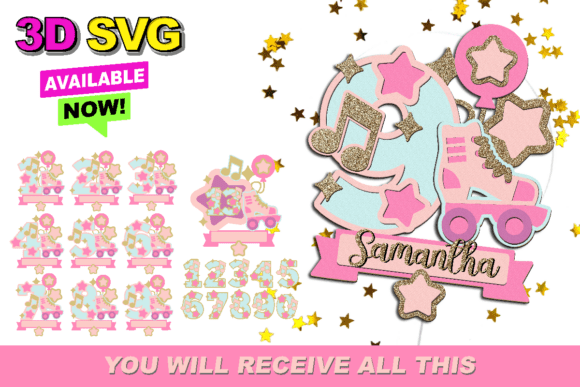
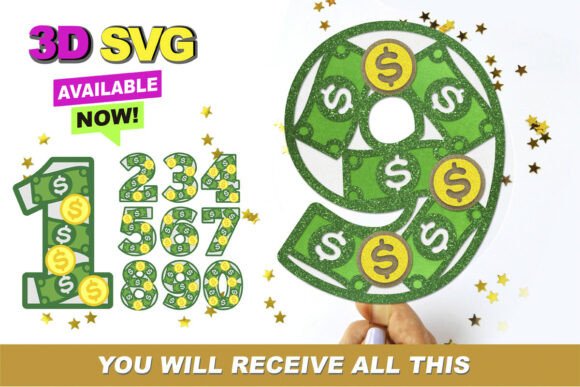
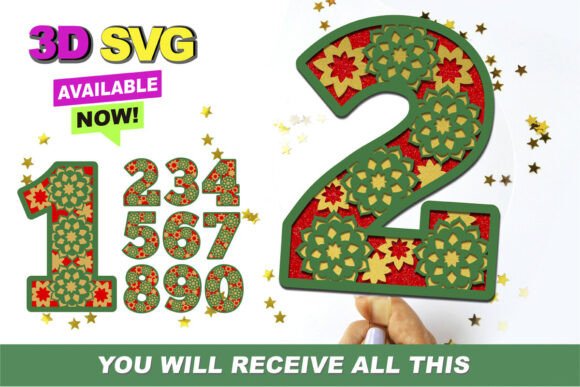
As someone who’s launched over 200 digital product listings across Etsy, Creative Market, and Shopify—mostly SVG bundles, Canva templates, and print-on-demand collections—I opened Arabic Numbers 3D SVG expecting either a niche novelty or a quietly versatile workhorse. What I found was the latter: a clean, dimensional set of numerals (0–9) with subtle depth, soft shadows, and consistent line weight that reads as modern but not sterile, decorative but not fussy.
The mood leans toward elevated minimalism—think nursery wall art meets boutique packaging design. It’s not overly playful like cartoon numbers, nor is it starkly technical like engineering schematics. Instead, it lands in that sweet spot for small business branding: warm enough for handmade businesses, structured enough for professional service providers, and distinctive enough to stand out in a sea of flat vector numerals. Buyers drawn to this asset will likely be curating cohesive seasonal bundles—Ramadan decor, Arabic-language learning kits, bilingual baby announcements, or culturally rooted wedding stationery.
What makes Arabic Numbers 3D SVG especially useful isn’t just its aesthetic—it’s how readily it translates across formats and platforms. Because it’s built as scalable vector art, I tested it across real-world use cases before finalizing my listing:
- SVG products: Imported cleanly into Cricut Design Space and Silhouette Studio with no layer corruption or offset issues—no manual cleanup needed. Cut lines are precise, even at 1.5” height.
- PNG designs: Exported at 300 DPI with crisp transparency—ideal for planner stickers, greeting card overlays, and tumbler wrap mockups.
- Sublimation designs: Works well on light-colored ceramic mugs and cotton tote bags when paired with a simple background shape or border.
- Printable wall art: Scales beautifully up to 24x36” without pixelation. Paired with a muted linen texture overlay, it gains quiet luxury.
- Canva templates: Dragged straight into Canva Pro; resized, recolored, and layered with Arabic calligraphy fonts without distortion.
- Social media graphics: Used as focal points in Instagram Story countdowns and Pinterest pins for bilingual education content—high visual recognition even at thumbnail size.
Where Arabic Numbers 3D SVG strengthens product presentation is in consistency and perceived value. When building a digital download bundle—say, “Bilingual Baby Milestone Kit”—using the same number set across onesies, growth charts, and photo props creates instant visual hierarchy and brand cohesion. That consistency builds customer trust: shoppers recognize your style, anticipate quality, and return for related items. In marketplace thumbnails, the gentle 3D effect adds just enough dimension to catch the eye without overwhelming the frame—especially against white or off-white backgrounds.
This graphic design asset shines brightest in large-format previews, themed bundles (like Eid or back-to-school collections), decorative layouts for printable planners, and merchandise where clarity and cultural resonance matter—mug designs, nursery prints, Islamic classroom posters, and Ramadan lantern packaging. It also performs well in social media promos and blog graphics where you need numerals that feel intentional, not generic.
That said, there are contexts where it needs careful handling. Avoid using it for tiny sticker details under 0.5”—the subtle shadow detail blurs at that scale. Don’t drop it into overly complex scrapbooking kits with 8+ overlapping layers; the depth can visually compete rather than complement. On dark backgrounds, test contrast first—the default gray-shadow version loses definition unless manually adjusted to a lighter tone or inverted. And if your Cricut project requires ultra-fine interior cuts (e.g., intricate lace-style numbering), inspect the SVG paths closely: while the outer edges cut flawlessly, some inner contours may need slight simplification for vinyl weeding.
Before publishing any product using Arabic Numbers 3D SVG, here’s what I always do:
- Test it on three real mockups: a mug, a framed printable, and a Cricut-cut vinyl decal—verify color accuracy, scaling, and edge sharpness.
- Preview the listing thumbnail at 120px width—does the numeral remain legible and distinct?
- Check how it renders on both white and charcoal backgrounds in Canva and Photoshop.
- Print a physical sample on matte cardstock and glossy sticker paper to assess tonal range and ink saturation.
- Verify PNG exports retain full transparency—no stray white pixels around the base shadow.
- Confirm the included commercial license permits finished goods (e.g., printed mugs, embroidered tote bags) and digital resale (e.g., in Canva templates or design bundles).
- Organize files clearly for customers: separate SVG, PNG (transparent + white background), and EPS versions, each labeled by number and size variant.
- Pair it intentionally with complementary fonts—serif for elegance (e.g., Playfair Display), sans serif for clarity (e.g., Poppins), script for warmth (e.g., Great Vibes), and display fonts for festive impact (e.g., Cairo).
One final note: while Arabic Numbers 3D SVG is ready for immediate use and works seamlessly with cutting machines, don’t skip the testing phase. A single misaligned shadow in a product mockup can lower click-through rates. A PNG with faint background bleed can trigger refund requests. This isn’t just another clipart pack—it’s a commercial design tool. Treat it like one: validate, refine, and integrate deliberately.
For Etsy sellers building culturally grounded digital downloads, Canva template creators expanding into bilingual markets, print-on-demand entrepreneurs launching Ramadan-themed merchandise, or crafters designing custom Cricut projects for clients, Arabic Numbers 3D SVG delivers more than visual flair—it delivers reliability, flexibility, and quiet professionalism. Used thoughtfully, it becomes part of your design language—not just an add-on graphic.